
Learner Driver Rules You Need to Know
1 September 2026 |
 Chris Penfold
Learning to drive is one of the most exciting milestones you’ll ever cross. Getting behind the wheel gives you real freedom, but before you set off for your first private practice session in a parent’s or friend’s car, knowing the essential learner driver rules is crucial. At GoShorty, we’re here to help you navigate these rules so you can gain road experience safely and legally.
Knowing the legal requirements keeps you safe, confident, and on the right side of the law as you build your road hours. From driving supervisor responsibilities and passenger rules to vehicle requirements and securing flexible temporary learner driver insurance, these rules ensure you can focus on improving your skills with complete peace of mind.
Navigating DVLA rules for learner drivers doesn’t need to feel overwhelming. Whether you’re planning extra practice over a term break, wondering if you can drive at night, or checking motorway restrictions, we’ve broken down all the essential rules to help you learn to drive safely.
Learner Driver Rules at a Glance
If you’re looking for a quick breakdown before getting behind the wheel, here are the core learner driver rules you need to follow:
- You must always drive with an appropriate supervisor (aged 21+ with a full licence held for 3+ years) sitting in the front passenger seat.
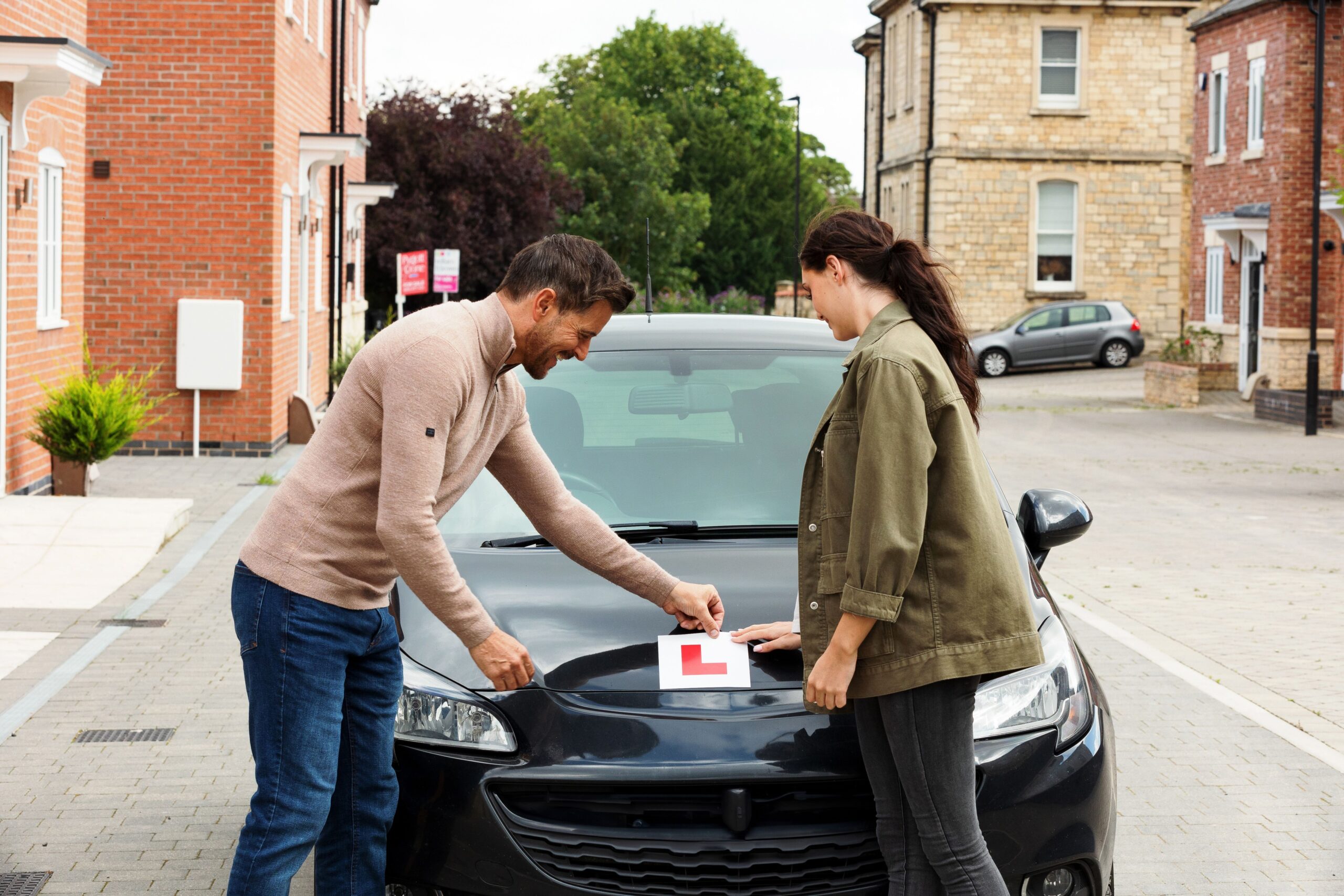
- Red L plates (or D plates in Wales) must be clearly displayed on the front and rear of your vehicle whenever a learner is driving.
- You must be legally insured to drive the specific vehicle you’re practising in.
- Learners can drive on A roads, standard roads, dual carriageways, and motorways (motorways require a dual-controlled car with a qualified ADI in GB).
Essential Provisional Driver Rules and Requirements
Before you turn the key in the ignition, you must ensure you meet all legal provisional driver rules for UK roads.
Age Requirements and Disability Exceptions
In the UK, most people can apply for a provisional licence at 15 years and 9 months old. However, you must wait until your 17th birthday before you can legally drive a car on public roads.
If you’re wondering if you can drive at 16 with a parent in the UK, the answer is yes – but only under specific circumstances. If you receive or have applied for the enhanced rate of the mobility component of Personal Independence Payment (PIP), you can start driving a car at 16 when accompanied by a supervisor.
Eyesight Requirements
Before starting your driving journey, you need to ensure your vision meets official standards. You must be able to read a standard car number plate from a distance of 20 metres (around 5 car lengths).
If you need glasses or contact lenses to read the plate, you must wear them every time you drive. Driving without required visual correction is illegal and instantly invalidates your insurance cover.
How Long Does Your Provisional Licence Last?
The physical photocard itself must be renewed every 10 years, which you can manage online through the GOV.UK licence renewal service.
However, your actual provisional driving entitlement stays valid until your 70th birthday. That means you won’t lose your entitlement if you take a break from lessons, though keeping your photocard up to date remains essential for legal driving.
Can You Drive With a Provisional Licence Without a Theory Test?
Yes, you can drive with a provisional licence without first passing your theory test. You’re legally allowed to start practical driving lessons and private practice on public roads as soon as your provisional licence becomes active.
Passing your theory test is only required when you’re ready to book your practical driving test. Once you pass your theory test, your certificate remains valid for two years, giving you time to prepare for your practical exam.
Displaying L Plates and D Plates Correctly
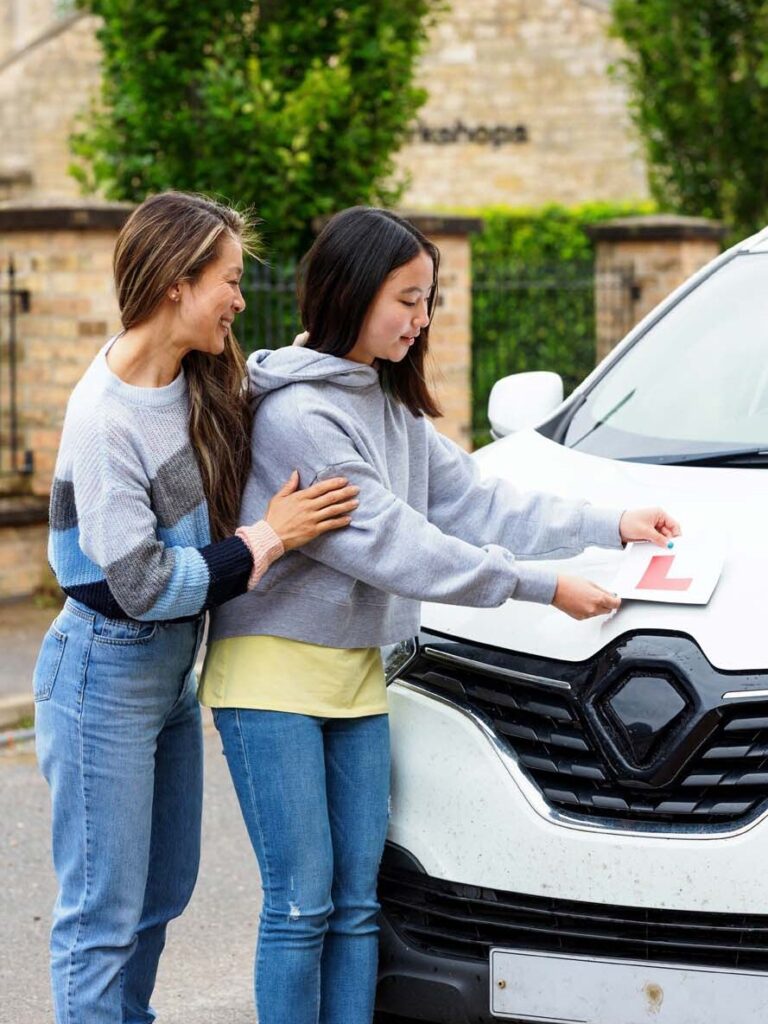
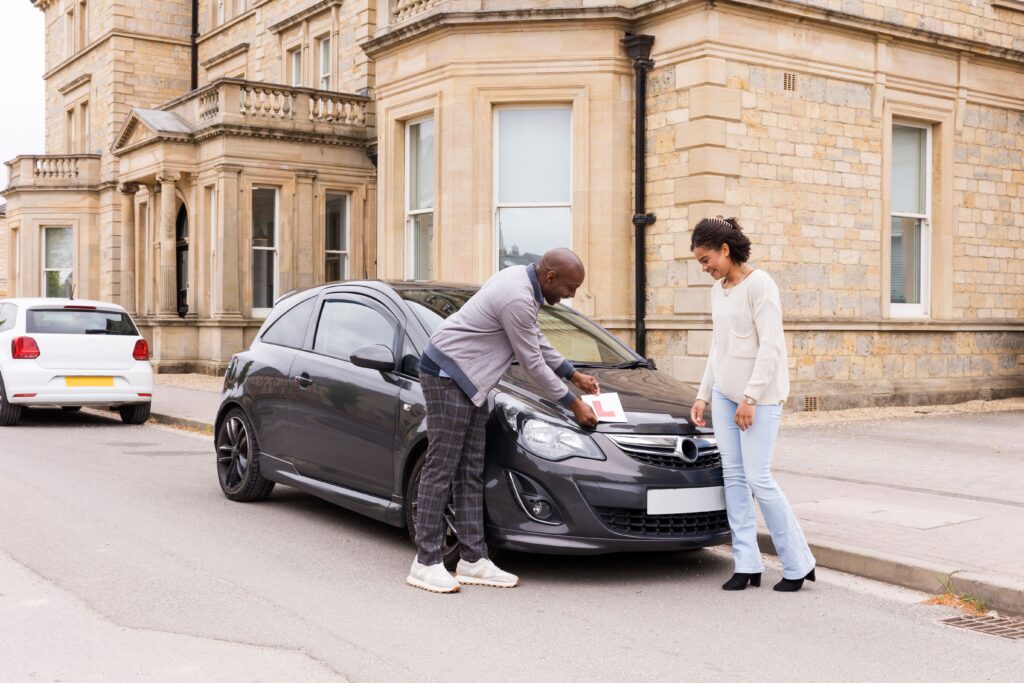
Displaying learner plates is a strict legal requirement every time a learner drives on public roads.
- You must clearly display L plates (or D plates in Wales) on both the front and rear of the vehicle.
- Plates must be clearly visible from a distance and kept clean from dirt or obstructions.
- Official L plates must measure exactly 178mm x 178mm with a red L on a white background (smaller stickers aren’t legally compliant).
- When a qualified driver uses the car without a learner, L plates should be removed or covered.
Driving without L plates clearly displayed can result in 3 penalty points on your provisional licence and a fine.
Supervising a Provisional Driver Rules
Driving as a learner requires proper supervision whenever you’re on the road. You can never drive alone on a provisional licence, regardless of how confident you feel behind the wheel.
Whether you’re borrowing a parent’s car over a uni break or getting extra hours in with a family friend on the weekend, understanding the exact legal requirements for who can sit with a learner driver ensures every practice session remains completely legal. Your supervisor must:
- Be at least 21 years old – though some insurance policies may require that they are at least 25.
- Hold a full UK or EU/EEA driving licence for the vehicle type (manual or automatic) for at least three continuous years.
- Be fit to drive, meaning supervisors cannot be under the influence of alcohol or drugs.
- Pay full attention to the road, meaning supervisors cannot use a handheld mobile phone while supervising you.
If you’re practising in a manual car, your supervisor must hold a full manual UK or EU/EEA licence that they’ve held for at least three continuous years. A supervisor who only holds an automatic licence cannot legally supervise a learner driving a manual vehicle.
Car Must Be Road Legal
Before taking any vehicle out for private road practice, you must ensure the car itself meets all legal roadworthiness standards.
- The car must be registered, taxed, and have a valid MOT certificate.
- Tyres must meet legal tread depth requirements (at least 1.6mm across the central three-quarters of the tread).
- All lights, indicators, brakes, and seatbelts must be fully operational.
- You should fit an extra interior rear-view mirror so your supervisor has a clear view of traffic behind (this extra mirror is compulsory if you use your own car for the practical test).
Learner Driver Restrictions on Roads
What roads learners can drive on depends on who’s supervising you:
- Standard A-Roads and Dual Carriageways: Learners can drive on standard single-and dual-carriageways accompanied by a supervisor or instructor.
- Motorways (England, Scotland, Wales): Learners can drive on motorways in Great Britain, but only when accompanied by an Approved Driving Instructor (ADI) in a dual-controlled car. You cannot drive on a motorway with family or friends supervising.
- Motorways (Northern Ireland): Learner drivers in Northern Ireland are not permitted on motorways under any circumstances, even with a qualified instructor.
Speed Limits and Regional Rules
In England, Scotland, and Wales, learner drivers are subject to standard national speed limits unless road signs state otherwise.
However, in Northern Ireland, learner drivers (and new drivers holding an ‘R’ plate) are legally restricted to a maximum speed limit of 45 mph on all roads, including dual carriageways.
Towing Trailers and Caravans
Learner drivers holding a provisional category B licence are not permitted to tow a trailer or caravan on public roads during practice sessions. You must pass your practical test before you can legally tow.
Mobile Phones and Sat-Nav Use
Strict mobile phone laws apply to learners just as they do to qualified drivers. You must not use a handheld phone or touchscreen device while driving.
If you’re using a phone as a sat-nav, it must be fixed in a dashboard holder or windscreen mount before setting off, and you cannot touch it while the engine is running. Crucially, your supervisor is also legally forbidden from using a handheld phone during your practice session.
Can a Learner Driver Have Passengers?
Yes, learner drivers can carry passengers. UK law doesn’t impose special restrictions on passenger numbers for learners, provided you don’t exceed the car’s legal capacity (matching the number of working seatbelts).
However, at least one person in the car must meet all official supervisor requirements. This supervisor must be completely sober, fit to drive, and seated in the front passenger seat next to you to monitor your driving and intervene if necessary.
Learner drivers can carry child passengers, as long as children are seated in the correct, legally required child car seats for their age and height.
Carrying a full car of friends can easily create extra distraction. Keeping passenger numbers low during your early practice sessions helps you focus entirely on the road.
Can Learner Drivers Drive at Night?
Yes, learner drivers can legally drive at night. There are no curfew restrictions on provisional licence holders in Great Britain or Northern Ireland.
Practising after dark offers a brilliant way to gain experience with dipped headlights, reduced visibility, and changing road conditions. As long as your supervisor is awake and alert and meets all legal requirements, nighttime practice sessions are completely permitted.
Speeding and Penalty Points: What Can Provisional Drivers Not Do?
When holding a provisional licence, you’re bound by the exact same traffic laws as qualified drivers.
What Happens If a Learner Driver Is Caught Speeding?
If caught speeding as a learner driver, standard penalties apply: a minimum £100 fine and 3 penalty points on your provisional licence.
Any penalty points collected while driving on a provisional licence transfer straight onto your full licence once you pass your test. Keeping your provisional record clean ensures a smooth transition to your full licence.
Checklist: What Provisional Drivers Cannot Do
To keep your practice completely legal and hassle-free, here’s a quick checklist of key things provisional licence holders cannot do:
- Drive alone without an appropriate supervisor sitting in the front passenger seat.
- Drive on motorways without a qualified Approved Driving Instructor (ADI) in a dual-controlled car (or at all in Northern Ireland).
- Drive without displaying compliant red L plates (or D plates in Wales) on both the front and rear of the vehicle.
- Use a handheld mobile phone or adjust a sat-nav while driving or sitting in stationary traffic with the engine running.
- Tow a trailer or caravan on public roads before passing your practical test.
- Exceed 45 mph on any road if driving in Northern Ireland.
- Drive without valid learner insurance for the vehicle they’re practising in.
Follow These Learner Driver Rules to Stay Safe and Covered
Mastering learner driver rules gives you a solid foundation for becoming a safe, confident motorist. By ensuring your supervisor meets legal requirements, displaying L plates clearly, and securing valid insurance, you can focus on enjoying your time behind the wheel.
If you’re planning extra private practice in a parent’s or friend’s car, standalone temporary cover protects their No Claims Bonus while giving you total flexibility. Get a quote in under two minutes, manage your cover on the GoShorty app, and hit the road with complete confidence.
Similar articles you might like
-
The Cheapest Way to Insure a Learner Driver
Getting your driving licence gives you an incredible sense of independence, but between professional driving lessons, test booking…
-
Is It Better to Learn Manual or Automatic?
Choosing between manual or automatic driving lessons is a really important decision to make when you’re deciding to…
-
What You Need to Know About Learner Insurance on Your Own Car
Buying a vehicle before passing your practical test is an exciting step towards getting your full driving licence.…