
Best Cars for Learner Drivers
9 April 2026 |
 Phil Evans
Picking your first set of wheels is one of the most exciting parts of learning to drive. It’s the first taste of freedom, but with so many models on the market, it’s easy to feel a bit overwhelmed. You want something that’s easy to park, won’t cost a fortune to insure, and keeps you safe while you’re still mastering those hill starts.
We’re experts in learner insurance, so we know what makes a good learner car. Here we’ll break down the best cars for learner drivers, what makes a car learner-friendly, and how the right choice can help you find the cheapest car for learner driver insurance.
What Makes A Great Learner Car?
Before you start browsing through specific models, it helps to know what actually makes a vehicle suitable for someone who’s still mastering the basics. When you’re just starting out, you don’t need a massive engine or high-tech gadgets that might distract you. Instead, you should consider these factors and features to help you choose the best car for you to learn in.
Low Insurance Groups
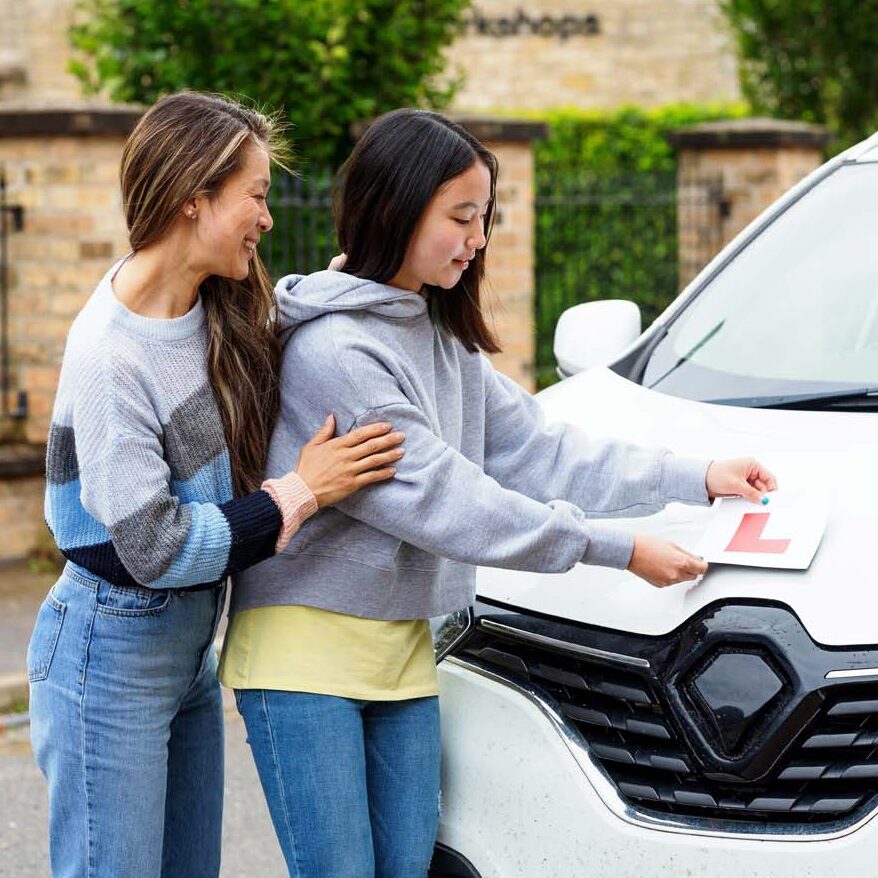
Car insurance for young drivers is notoriously pricey. To find the best car for learner driver insurance, you should stick to cars in insurance groups 1 to 5 where possible. These are usually smaller, less powerful cars that are cheaper to repair, which can save you hundreds of pounds on your premiums. However, even mid-range hatchbacks can be affordable if they have high safety ratings and lower repair costs.
Manual vs Automatic
Once you’ve decided if you should learn to drive, you next need to choose which gearbox you’re committing to. Manual cars are generally cheaper to buy and insure, and passing in a manual gives you the freedom to drive any car later on. However, many learners now find that learning in an automatic is faster and less stressful because there’s no clutch to master. If you’re undecided, you can check out our guide on whether you should learn automatic or manual for a deeper dive.
Helpful Tech: Hill-Start Assist And Connectivity
According to Auto Express, features like hill-start assist are a massive help for learners. This tech holds the brakes for a second or two after you release them, preventing the car from rolling back on a hill while you find the bite point. It’s also worth looking for cars with good connectivity – having Apple CarPlay or Android Auto means you can use familiar sat-nav apps without being distracted by your phone.
Good Visibility And Light Controls
You need to be able to see clearly out of every window. Larger windows and a higher driving position make it much easier to judge distances during manoeuvres like parallel parking. You also want light controls; a clutch that isn’t too heavy and steering that feels responsive without requiring too much muscle makes low-speed driving feel much less like a workout.
Small Dimensions And Safety
A compact city car or small hatchback is much less intimidating to navigate through tight gaps or busy town centres. Always check the Euro NCAP rating of any car you’re considering. A five-star rating means the car has been rigorously tested for occupant protection. Features like Autonomous Emergency Braking (AEB) act as a great safety net while you’re still building your reflexes.
Our Top Picks For The Best Cars to Learn to Drive In
Based on reliability, ease of driving, and the most commonly insured models at GoShorty, these are the best cars for learners on the road today.
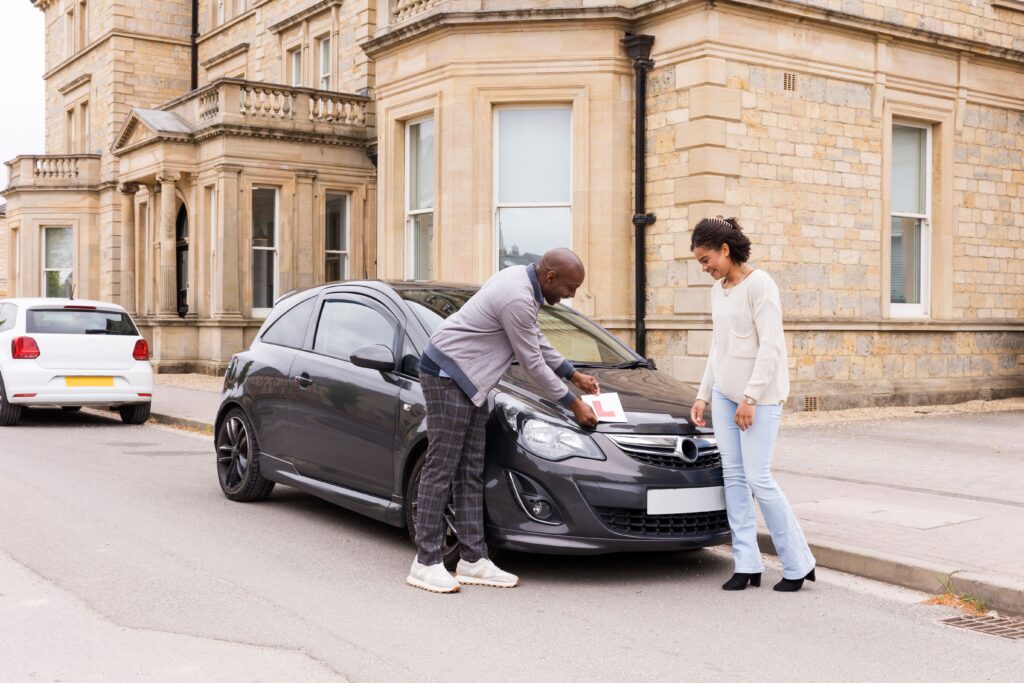
Vauxhall Corsa
The Corsa is a legend among new drivers and is a staple for many driving schools. It’s widely considered the best car for a 17-year-old, or any new driver, because it balances a modern feel with very affordable running costs. Our data shows it’s one of the cheapest learner cars to cover, with an hour of insurance available from £16.98.
Ford Fiesta
While Ford has stopped producing new Fiestas, it remains arguably the best car to learn to drive in on the used market. Auto Express also stands by it being one of the best learner cars, citing used prices from £2,000, not too bad. Also, it’s a top-used choice for its light steering and excellent visibility, a fantastic all-rounder that feels steady at higher speeds. Which is great for practising to drive on A-roads. You can get covered with us in a Fiesta from £21.26 for an hour, or £58.60 for a full week of practice.
Volkswagen Polo
If you want something that feels a bit more robust, the Polo is the way to go. It offers a premium feel and legendary build quality. It’s a solid choice if you’re eventually planning to take your car onto the motorway once you’ve passed. Despite the premium badge, it’s still very affordable to insure; you can get an hour of cover from £18.96, or a day from £31.32.
Hyundai i10
For those looking for the absolute cheapest car to learn to drive in, the i10 is hard to beat. It sits in some of the lowest insurance groups (often Group 1 or 2). It’s one of the best small cars for learners, too, making it easy to use and navigate around cities or tight parking spots. It’s compact, has a tiny turning circle, and is exceptionally easy to park.
Great Mid-Size Options For Learners
Sometimes, you might be practising in a family car that’s a bit larger than a standard city car. The good news is that many mid-size hatchbacks are still excellent for learning in.
- Audi A1: A popular choice for those wanting a premium feel, despite the more premium spec, this is still a pretty good car for learners to insure. With us, prices start from £19.13 for one hour or £38.39 for one day.
- Vauxhall Astra: A step up in size from the Corsa, the Astra is a common family car that’s surprisingly easy to learn to drive in. If you’re borrowing one for practice sessions, hourly cover starts from just £17.98, with a week from £84.94.
- Ford Focus: Known for its brilliant handling, the Focus is stable and predictable, making it a great car for building confidence in. As a learner, you can get an hour of cover from £20.57.
- Volkswagen Golf: Named Best Car for New Drivers in 2025, the Golf is a gold standard for hatchbacks and a great option for learning in. A day of cover starts from around £24.22 with prices for a week starting from £83.
If your main priority is keeping costs down, look for cars with smaller engines (typically 1.0 to 1.2 litres). Remember, the lower the insurance group, the cheaper the car is to insure for learner drivers, because they are inexpensive to repair and safe.
Many learners find that they’re not sure what the best way is to insure a learner driver when they want to practice in a family member’s car alongside their instructor’s vehicle.
By using temporary learner driver insurance, you can get covered on a parent’s car for a morning, then switch to a different model for an afternoon session. This variety builds experience and ensures you aren’t just a one-car driver. It’s also a much simpler way to handle things than adding a learner driver to a main policy, which can often be expensive and put the car owner’s No Claims Discount at risk.
Before you head out, just make sure you check who can sit with a learner driver to ensure your supervisor meets the legal requirements.
Regardless of which car you choose, finding a vehicle that makes you feel safe and in control is the first step toward getting that pink licence. If you’re ready to start your private practice, you can get a quote and be covered in minutes, or in just a few taps with the GoShorty app.
Similar articles you might like
-
The Cheapest Way to Insure a Learner Driver
Getting your driving licence gives you an incredible sense of independence, but between professional driving lessons, test booking…
-
Is It Better to Learn Manual or Automatic?
Choosing between manual or automatic driving lessons is a really important decision to make when you’re deciding to…
-
What You Need to Know About Learner Insurance on Your Own Car
Buying a vehicle before passing your practical test is an exciting step towards getting your full driving licence.…