
What Roads Can Learners Drive On?
14 July 2026 |
 Graeme Stoker
Learning to drive is an exciting step towards independence, but hitting the public roads for the first time can feel a bit daunting. When you’re practising with a provisional licence outside of lessons, it’s vital you and your supervisor know what roads learners can drive on, and crucially, what roads learners can’t drive on.
The quick answer is that you’re legally allowed to practise on almost all public roads in the UK, including busy urban streets, country lanes, A roads, and dual carriageways. However, whatever road you’re on as a learner, you must have a driving supervisor sitting next to you, and you must have learner driver insurance in place.
If you’re planning to get some extra hours behind the wheel outside of professional lessons, here’s your complete guide to where you can and can’t drive, so you can build your confidence safely.
The UK Roads Learners Can and Can’t Drive On
Provisional licence holders can drive on almost any public road in the UK, provided they’re supervised by a qualified driver and have the correct insurance.
To help you plan your practice routes safely, here’s a quick guide to UK road rules for learners:
- Local Streets and Country Lanes: Completely legal for practice, though you must stay alert for tight spaces and blind bends.
- A Roads: Allowed. These connect towns and are excellent for practising higher-speed management.
- Dual Carriageways: Allowed. Great for getting comfortable with overtaking and using slip roads.
- Motorways: Only allowed during professional lessons with an Approved Driving Instructor (ADI) in a dual-controlled car. Private practice is strictly forbidden here.
When it comes to what roads you can’t drive on with a provisional licence during private practice, the forbidden list is short; it’s just motorways that are out of bounds. As long as you meet the legal requirements for supervision and cover, you’re free to explore almost any route.
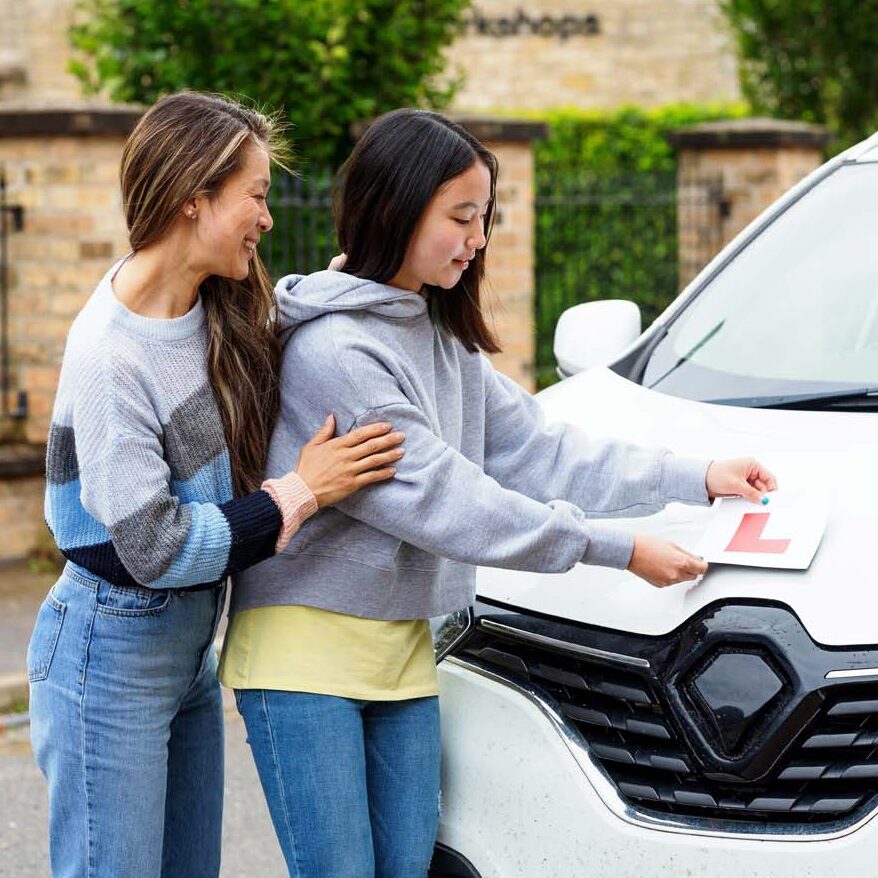
Can Learners Drive on A Roads?
If you’re curious about whether you can drive on A roads as a learner, the answer is a resounding yes.
What Is an A Road?
In the UK, A roads are the primary routes designed to connect major towns and cities. They are always marked with an ‘A’ prefix (like the A1, A38, or A406). These roads can be single carriageways with one lane in each direction, or wider multi-lane routes. Because they handle everything from local traffic to long-distance commuters, speed limits can range anywhere from a local 30mph up to the national limit of 70mph.
When it comes to whether learner drivers can drive on roads like the A1, the answer isn’t entirely straightforward. You can practise on the A1, but you must look out for sections of the road designated as A1(M). The (M) stands for motorway, and different rules apply as soon as those blue signs appear. So, if you’re planning to practice your driving on an A road, make sure you plan your route wisely so you don’t accidentally end up on any motorway sections.
Pros of Practising on A Roads
- Speed Management: They’re a fantastic way to practise moving through your gears and matching the speed of faster traffic.
- Varied Junctions: You’ll encounter a mix of roundabouts, T-junctions, and traffic lights, which helps build real-world reaction times.
- Sign Reading: They’re great for learning how to read road signs and road markings at higher speeds.
Cons of Practising on A Roads
- Impatient Drivers: A roads are popular commuter routes, so you may find other motorists tailgating or overtaking impatiently.
- Sudden Hazards: Unlike motorways, A roads can have unexpected hazards like farm vehicles, cyclists, and pedestrians.
Can a Learner Driver Drive on a Dual Carriageway?
Yes, learner drivers can legally drive on dual carriageways, so it’s another great place to build your confidence on faster roads.
What Is a Dual Carriageway?
The term ‘dual carriageway’ refers to roads that are physically divided by a central reservation – such as a concrete barrier, metal guard rail, or a strip of grass – which separates traffic travelling in opposite directions. A common misconception is that ‘dual’ means two lanes in each direction. In reality, it simply refers to the physical split in the road. You can actually have single-lane dual carriageways, or roads with three or more lanes on each side. The national speed limit for cars on a dual carriageway is 70mph when it’s two lanes, 60mph when it’s one lane in each direction, unless signs state otherwise.
A common question that pops up for private practice is: can learners go on dual carriageways without an instructor? Yes, you don’t need a professional driving instructor to drive on a dual carriageway. As long as your supervising driver is legally qualified to sit with you and you’re properly insured, you can practice driving on dual carriageways with a family member, partner or friend.
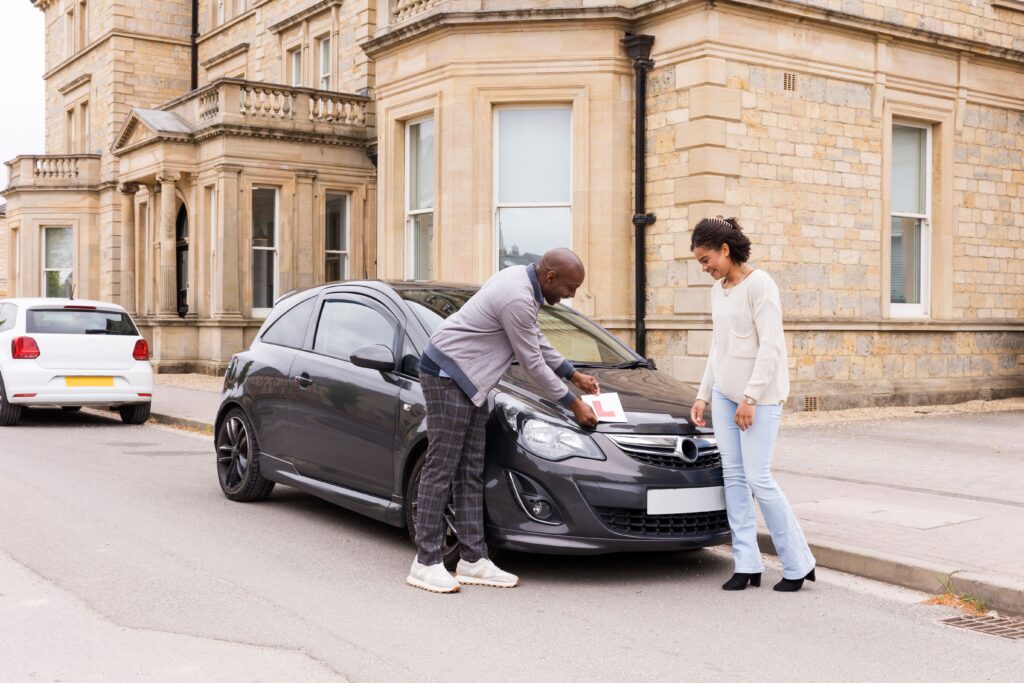
Pros of Learner Drivers on Dual Carriageways
- Slip Road Practice: Joining and exiting via slip roads is a vital skill that requires matching your speed to the main flow of traffic.
- Overtaking Experience: You can safely practise overtaking slower vehicles and returning to the left-hand lane.
- High-Speed Control: It helps you get comfortable maintaining control of the vehicle at 70mph, which is highly beneficial preparation for your practical test and life once you’ve passed.
Cons of Learner Drivers on Dual Carriageways
- High Speeds: Driving at 70mph can feel incredibly fast and intimidating for a beginner.
- Blind Spots: Multi-lane traffic means you must be extra vigilant with your mirror checks and blind spot observations.
4 Handy Tips for Learners Driving on Dual Carriageways
- Master the art of merging: When joining a dual carriageway, use the slip road to pick up speed and match the flow of the traffic already on the main road. Remember to check your blind spot and indicate early.
- Keep to the left-hand lane: Ignore terms like “fast lane” or “slow lane.” The right-hand lane is strictly for overtaking or turning right. Once you’ve safely overtaken a slower vehicle, move back over to the left.
- Trust your mirrors: Mirror routines are the backbone of passing your test. Use them early and often to judge the speed of vehicles behind you before changing lanes or exiting.
- Stay alert for drifting traffic: High-speed roads can make some drivers lose concentration, especially on long journeys. Stay focused on the vehicles around you so you can easily spot and avoid anyone drifting out of their lane.
Can a Learner Driver Go on the Motorway?
For decades, learners in the UK weren’t allowed to drive on the motorway at all. However, in 2018, the law changed to help young drivers gain vital high-speed experience before passing their test.
Today, provisional drivers can drive on the motorway, but only under very strict conditions. You can only drive on the motorway if you:
- Are accompanied by an Approved Driving Instructor (ADI).
- Are driving a car fitted with dual controls.
- Are displaying L-plates (or D-plates in Wales).
This means you can’t drive on the motorway during private practice with your parents or friends. If you want to practise on the M1, for example, you can only do so during an official lesson with a qualified instructor.

What Is a Motorway?
Motorways are high-speed, multi-lane roads designed exclusively for fast, long-distance travel between major destinations. They’re marked with blue signs, feature ‘M’ prefixes (like the M1 or M25), and completely ban pedestrians, cyclists, learner motorcyclists, and slow agricultural vehicles. Motorways do not have sharp bends, traffic lights, or roundabouts on the main carriageways, and traffic merges exclusively via long slip roads. The speed limit is 70mph unless digital smart motorway signs display a temporary limit.
For many learners, taking that step onto a high-speed road can feel incredibly daunting. However, gaining this experience is a vital part of staying safe after you pass. According to the Department for Transport’s 2026 Road Safety Strategy, drivers aged 17 to 24 represent just 6% of licence holders but are involved in 24% of fatal and serious collisions. Gaining hands-on experience on our busiest roads with a qualified instructor is a highly effective way to build confidence and reduce those risks.
What Happens If a Learner Goes on the Motorway Accidentally?
If you accidentally go on the motorway as a learner without a qualified instructor and dual controls, you’re technically breaking the law. If you get caught, you could face a fine and points on your provisional licence.
Driving on a motorway without an instructor before you’ve passed is a serious safety risk and can lead to you being stopped by the police. If you do make a mistake and find yourself heading towards a motorway slip road, don’t panic.
- Stay calm and keep your focus on the road.
- Don’t attempt to turn around or reverse back up the slip road – this is incredibly dangerous.
- Join the motorway safely, stay in the left-hand lane, and take the very first exit.
- Find a safe, legal place to pull over, collect your thoughts, and plan a new route back.
Are Learner Road Rules Different Across the UK?
While the Highway Code applies across the UK, there are some important regional variations you need to know, especially if you’re taking your practice sessions across borders.
Wales: Bilingual Plates and Built-Up Limits
If you’re practising in Wales, you can display red D plates (for ‘dysgwr’, the Welsh word for learner) instead of the standard L plates – or even use one of each.
Another major difference is Wales’s default speed limit. In built-up areas (roads with streetlights and no other speed signs), the default limit is 20mph, compared to 30mph in England, Scotland, and Northern Ireland.

Northern Ireland: Speed Limits and Motorway Bans
Northern Ireland has the most unique rules for learner drivers, though a new Graduated Driver Licensing (GDL) scheme starting in October 2026 is set to reform these. Currently, the rules are:
- The 45mph limit: If you’re a learner in Northern Ireland, you cannot exceed 45mph on any road, even if the posted limit is 60mph or 70mph. This restriction also applies for 12 months after you pass your test, during which you must display R (Restricted) plates.
- No motorways: Unlike the rest of the UK, learners in Northern Ireland are strictly banned from motorways under all circumstances, even during lessons with an instructor.
It’s worth noting that once the new GDL system takes effect on 1 October 2026, the 45mph cap will be removed, and motorways will be allowed during professional lessons, but a minimum six-month learning period and post-test night-time restrictions will be introduced.
Stay Protected When Practising on UK Roads
If you’re planning to practise in a parent’s or friend’s car, you might worry about how it affects their policy. If you’re added as a named driver to their annual policy, it can be expensive, and any accidents you have could wipe out their hard-earned No Claims Bonus.
Instead of adding a learner driver to your insurance, consider a separate policy. Our temporary learner driver insurance offers a flexible, independent solution. It provides comprehensive cover for you while you’re at the wheel, but because it’s a standalone policy, it protects the car owner’s No Claims Bonus if you need to make a claim. Making it one of the best ways to insure a learner driver.
Private practice on A roads and dual carriageways is one of the most rewarding ways to master your car control. Just make sure you’re properly protected before turning the key.
Download the GoShorty app to manage your short-term cover directly from your phone. Get a quote in under 2 minutes and protect your driving progress today.
Common Questions About Learner Road Rules
Can a learner driver carry passengers whilst driving on A roads and dual carriageways?
Yes, learner drivers can legally carry passengers when on a driving practice session. There’s no law restricting passengers, provided you have a qualified supervisor in the front passenger seat and you don’t exceed the legal passenger limit of the car you’re driving.
Can learner drivers practise on public roads at night?
Yes, you can practise driving at night on dual carriageways, A roads and all other roads (apart from motorways unless you’re with an ADI) in the UK. There’s no curfew for learner drivers, though you must still display your L-plates and be accompanied by a qualified supervisor at all times.
Can learner drivers drive on bypasses?
Yes, bypasses are normally classified as A roads or dual carriageways rather than motorways. This means you’re completely free to practise on them during your private driving sessions, as long as you avoid ending up on a motorway.
Can you drive on the motorway with a provisional licence?
You can only drive on the motorway with a provisional licence if you’re in a dual-controlled car with an Approved Driving Instructor (ADI). Once you pass your test, you’ll be legally allowed to drive on the motorway unsupervised.
Similar articles you might like
-
The Cheapest Way to Insure a Learner Driver
Getting your driving licence gives you an incredible sense of independence, but between professional driving lessons, test booking…
-
Is It Better to Learn Manual or Automatic?
Choosing between manual or automatic driving lessons is a really important decision to make when you’re deciding to…
-

What You Need to Know About Learner Insurance on Your Own Car
Buying a vehicle before passing your practical test is an exciting step towards getting your full driving licence.…