
Tips for Making Your Commute to Work Easier
4 August 2026 |
 Chris Evitt
Whether you love having some solo time to prepare for the day or you absolutely dread the morning rush, your daily commute to work can set the tone for your entire week. If you’ve been finding the journey a bit of a slog lately, you certainly aren’t alone.
The good news is that with a few smart adjustments, some clever planning, and the right driving setup, you can easily transform your morning and evening travel into a much more relaxed, productive, and even enjoyable part of your day, with the help of temporary car insurance. We’ve put together some practical commuting tips to help you reclaim your time and find the best way to commute to work for your lifestyle.
What Is Commuting Anyway?
First of all, what is commuting? Put simply, commuting is the regular journey you make between your home and your main place of work or study.
How you commute to work depends heavily on where you live, what transport links you have nearby, and whether you prefer the freedom of the open road or the convenience of letting someone else do the driving. While some lucky people can stroll down the stairs to a home office, most UK workers still need to make a physical journey to do their jobs.
According to the Department for Transport’s most recent national travel statistics, the way we get to work is highly varied. Driving a car is by far the most popular choice, accounting for 67% of commuters. Walking comes in second at 11%, alongside rail travel (including underground and trams), also at 11%, while local buses and other transit systems make up the rest.

What Does Commuting Mean on Car Insurance?
If you decide to drive to work, there’s a very important detail you need to get right on your policy.
When you set up car insurance, you’re asked how you use your vehicle. Many drivers choose Social, Domestic and Pleasure (SD&P), assuming it covers all everyday driving. However, SD&P only covers non-work driving, like weekend road trips, supermarket runs, and visiting friends.
If you drive your car to and from your main place of work, or even if you drive to a park-and-ride scheme or train station to catch a train for work, you need commuting cover on your policy.
It’s also worth knowing the difference between commuting cover and business cover. Commuting cover only applies to journeys between your home and one fixed location of work. If your job involves driving between multiple work locations, visiting clients, or heading off to external meetings during the day, standard commuting cover isn’t enough. In those situations, you’ll need a business class of use. Check out our guide on when you need business car insurance to make sure you’re covered for every mile.
Why Is Commuting So Stressful?
Let’s face the facts: for many of us, the trip to the office can feel like hard work before the actual workday even begins. If you’ve ever found yourself wondering why commuting is so stressful or why commuting to work feels so exhausting, the answer lies in the time drain and unpredictability.
According to the latest Department for Transport statistics, the average one-way commute in England sits at around 28 minutes, adding up to nearly an hour of travel time every single day. Over a typical working year, that means commuters spend over 220 hours in transit.
How long you spend travelling also varies hugely depending on your method of transport. Government data shows that while an average car commute takes around 26 minutes each way, a journey by local bus averages 40 minutes, and a National Rail commute climbs to a lengthy 64 minutes each way.
There are many reasons commuting causes stress; it’s not just the time it takes out of the day. Staring at brake lights or waiting on a cold platform for a delayed train triggers our body’s stress responses, leaving us feeling drained before we’ve even had our first coffee.
A one-way journey of 30 minutes or less is a reasonable length for a commute. If your travel time is creeping way past that mark, finding ways to make your commute less miserable is essential for keeping your mood high and your energy levels up. Here’s how to deal with commuting to work without losing your mind.

Comparing Your Commute Options: Driving, Rail, Bus, and Active Travel
Finding the best way to commute to work comes down to balancing speed, flexibility, and daily comfort. While every method has its perks, each transit option comes with specific trade-offs:
- Rail Travel: Taking the train theoretically lets you read, catch up on work emails, or simply switch off. However, reliability remains a major issue. Latest figures from the Office of Rail and Road (ORR) reveal that only 68.8% of passenger trains in Great Britain arrive on time, with around 3.2% cancelled completely. High peak fares and crowded carriages mean train travel isn’t always as smooth or stress-free as promised, though planned rail fare freezes aim to bring some relief.
- Local Buses: Buses offer an affordable network covering urban and suburban areas, but they’re heavily impacted by local traffic congestion. Department for Transport data shows an average bus commute takes 40 minutes each way, making it one of the slower travel options during rush hour, despite government bus fare caps helping to keep costs down.
- Active Travel (Walking & Cycling): Walking or cycling is easily the cheapest way to commute and double-hats as built-in exercise. DfT stats show an average walking commute takes around 15 minutes. However, active travel is realistically only viable if you live close to the office and don’t mind braving unpredictable British weather.
- Driving: Driving remains the preferred option for two-thirds of UK workers because it delivers unmatched door-to-door convenience, comfort, and control over your schedule. You decide your exact departure time, your route, the climate, and the soundtrack. While high fuel prices and the overall cost of owning a car can make full-time car ownership an issue for some, options like temporary insurance allow you to drive to work on the days you need to without committing to annual costs.
Tips for Commuting to Work by Car
If driving is your preferred option, you’re in good company. Government data revealing how many people commute to work by car shows that approximately two-thirds of workers in Great Britain rely on a car to get to their workplace.
While car commuting has its downsides, like traffic and fuel costs, there are plenty of practical ways to make your journey smoother. Here are some of our favourite tips for commuting to work by car to help you reduce commute stress:
- Plan for the unexpected with live navigation: Even if you’ve driven the same route hundreds of times, don’t just rely on memory. Switch on a live-traffic app like Waze or Google Maps before you start the engine. They can flag sudden accidents or congestion on your usual route and automatically divert you down quieter back roads to keep you moving.
- Turn your car into a private sanctuary: Instead of viewing your car as a metal box stuck in traffic, reframe it as a cosy personal refuge. Make sure you have a supportive seating position, keep your cabin clean, and set up a playlist of your favourite tunes. Finding engaging things to do on commute journeys, like listening to an interesting podcast or an audiobook, can make the miles fly by.
- Adjust your departure times: Leaving just ten minutes earlier or ten minutes later can make an unbelievable difference to your journey. By shifting your schedule slightly, you might be able to completely bypass the worst of the school run or the peak bottleneck at local roundabouts, turning a stressful crawl into a steady drive.
- Build your driving confidence: If the thought of busy commuter roundabouts or motorway lane-merging makes you nervous, try to set aside some time to work on your core driving skills to build your driving confidence and turn a nerve-wracking journey into a relaxed drive.
Cheap Ways to Commute to Work by Car
With fuel prices fluctuating and public transport fares rising, many of us are actively looking for ways to make commuting cheaper. Finding cheap ways to commute to work doesn’t mean you have to give up the convenience of driving; it just means driving smarter.
If you want to discover the cheapest way to commute while still enjoying the comfort of a car, carpooling is a brilliant option. Setting up a car-share scheme with colleagues who live nearby, or even friends who work in the same area, is one of the easiest ways to slash your commuting costs. If you share a ride with three other people, you can divide your fuel bills and city parking costs by four, saving you hundreds of pounds over the year.
Beyond the cost savings, sharing the drive makes your daily travel far more pleasant. Having a friend in the passenger seat transforms a dull solo journey into a social catch-up, helping the time fly by. You can even split driving duties across the day: one person drives during the morning rush, and the other takes the wheel on the journey home.
Car sharing also opens up great flexibility for team socials and Friday evening drinks. If your office plans an after-work get-together, one person in the carpool can step up as the designated driver for the evening. That way, everyone else can unwind with a drink, knowing they still have a safe, reliable lift straight to their front door.
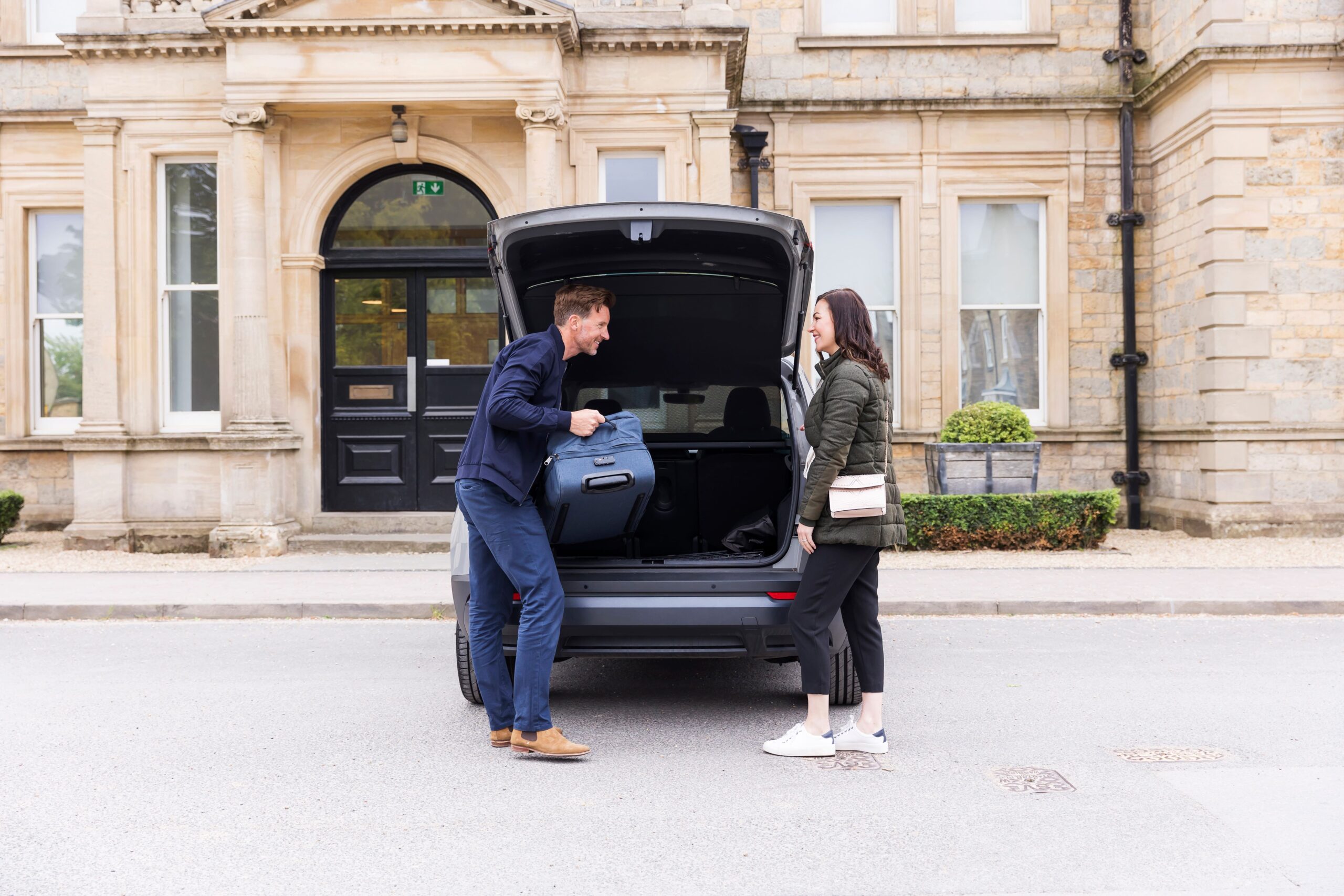
If you’re planning to share the driving duties, you’ll need to make sure everyone behind the wheel is properly covered. Temporary car insurance allows you to let someone else drive your car without risking your own annual policy.
Driving to Work Without Your Own Car
Perhaps you don’t own a car, but you still want the flexibility of driving to work on certain days. Or maybe you’re part of a household trying to save money by becoming a one-car family, meaning you have to share a single vehicle with your partner or housemate.
If you need to borrow someone else’s car to make your journey to work easier, you don’t need to go through the hassle and expense of adjusting their annual policy. You can quickly get insured on someone else’s car with temporary car insurance.
With us, you can set up a short-term comprehensive policy that covers you to drive a borrowed car for anything from an hour up to 28 days. Our flexible temporary policies include business class 1 cover as standard. Meaning you’ll be covered for commuting and other business travel too, so you can easily borrow a family member’s car to get to work for a few days without affecting their hard-earned No Claims Bonus if you need to make a claim.

Make Your Commute to Work Easier
Ultimately, there’s no single best way to commute to work. The ideal option is the one that fits your budget, your schedule, and your lifestyle. Whether you choose to walk, take the bus, or drive, making small, positive changes to your daily journey can drastically reduce your stress levels and give you back control of your morning.
If borrowing a car, sharing the driving with a colleague, or setting up a carpool is the solution that makes your life easier, we’ve got you covered.
Get a temporary car insurance quote in under two minutes, and make your daily commute a breeze.
Similar articles you might like
-

Tips for Making Your Commute to Work Easier
Whether you love having some solo time to prepare for the day or you absolutely dread the morning…
-

House Renovations & Tip Trips Without a Car
Planning a massive garden transformation or clearing out years of accumulated clutter from the spare room? We’ve all…
-
Why Driving to Europe is Better Than Flying
If you’re planning a European getaway, your default instinct is probably to head straight for a flight comparison…