
Do You Need Insurance for a Test Drive?
12 November 2026 |
 Chris Evitt
- The legal rule: You legally need valid insurance to test drive any car on UK public roads.
- Dealerships: Usually have dedicated motor trade policies that cover customer test drives, though you will need to present your driving licence and may be liable for an agreed excess.
- Private sales: You must arrange your own cover. A seller’s standard annual policy almost never covers an unrelated prospective buyer.
- Your own annual insurance: Most comprehensive policies no longer include “Driving Other Cars” (DOC) cover as standard, and those that do typically provide only third-party protection.
- The quick fix: You can arrange standalone hourly car insurance from just £11.721 in under two minutes, giving you comprehensive cover for your test drive.
Finding a car that ticks every box is exciting. Whether you’re eyeing a brand-new model on a showroom forecourt or meeting a private seller on their driveway, a test drive is often the deciding factor.
While established motor dealerships usually cover you under their commercial motor trade policies, private sellers rarely have insurance that covers other drivers. When buying privately, relying on your own annual policy’s “Driving Other Cars” (DOC) clause is risky because it’s often excluded or limited to third-party damage only.
The easiest, most reliable solution is taking out standalone temporary car insurance by the hour, which provides comprehensive cover and protects the seller’s No Claims Discount. Here’s everything you need to know about test drive insurance, what to check before setting off, and how to get covered in minutes.
What Is a Test Drive and Why Is It Essential?
A test drive lets you evaluate a vehicle in real-world driving conditions before handing over your hard-earned money. While photos, service books, and dealer descriptions provide background, a test drive shows you how the car behaves when you’re in control.
Taking the car out on the road gives you three big advantages:
- Checking driving comfort and ergonomics: You can test seat support, pedal spacing, cabin headroom, and blind-spot visibility to make sure the car fits your lifestyle and driving posture.
- Assessing mechanical health: Driving reveals how the engine pulls, how smooth the gear changes are, whether the clutch bites cleanly, and if the brakes stop in a straight line.
- Spotting hidden warning signs: Strange rattles over bumps, dashboard warning lights, tracking alignment issues, or excessive cabin vibrations are difficult to hide once you’re moving at speed.
Taking 30 to 60 minutes behind the wheel helps you buy with complete confidence or walk away before an expensive repair becomes your problem.
Car Sale Trends in the UK
According to the Department for Transport (DfT), over 2.4 million vehicles2 were registered for the first time in the UK in 2025, the largest amount in the past five years.
Alongside those brand-new vehicles, data from the Society of Motor Manufacturers and Traders (SMMT) shows over 7.8 million used car sales occurred in 20253.
With so many motorists shopping on the second-hand market, sorting temporary cover for test drives has seen massive growth, our customer data4 reveals how test-driving habits are changing across the country:
- Demand for test drive cover is surging: In 2025, test drive policies jumped by 90.6% compared to 2024. That appetite grew even faster in 2026, with test drive quotes rising by 41.6% between January and October compared with 2025, and by a massive 159.6% compared with the same period in 2024.
- Summer is peak test drive season: June and July are the busiest months of the year for test drive cover. Warmer weather and lighter evenings mean more buyers head out to inspect cars in person.
- Winter sees a quiet lull: By comparison, January and December are the quietest months for test drives as motorists pause their car search over the festive period.
With so many car sales being for used cars, knowing how to get insured for a private test drive has never been more important. Temporary insurance can provide test-drive cover in under two minutes. So, if you’re planning to try out a new set of wheels, make sure you understand how insurance works before you turn the key, so your test drive stays relaxed, legal, and hassle-free.
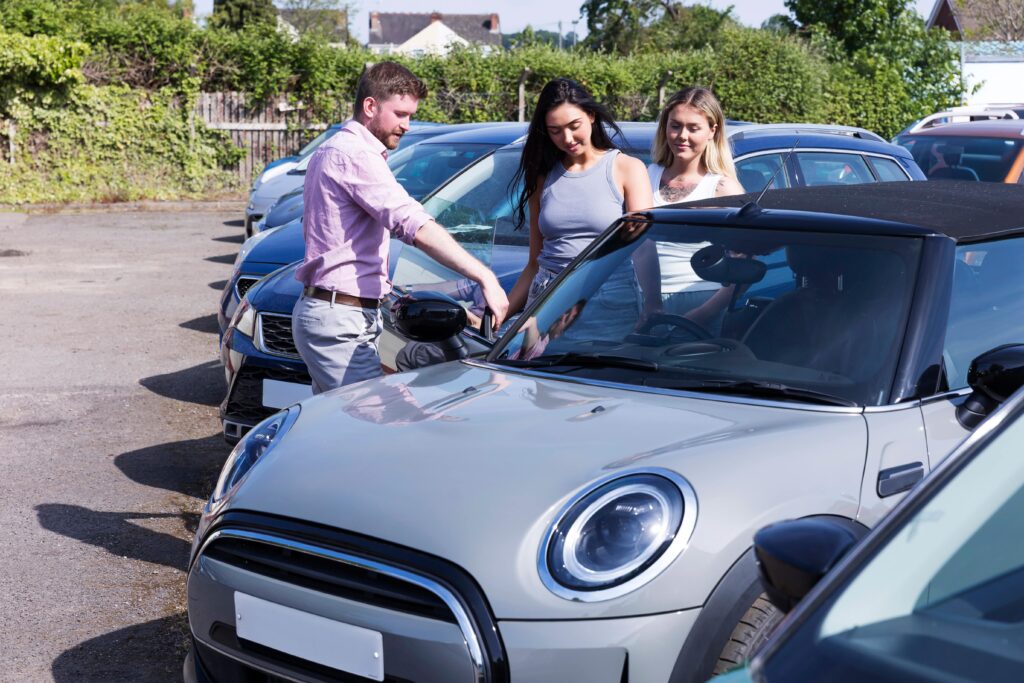
How Does Insurance Work on Test Drives?
How test drive insurance works depends entirely on who you’re buying the vehicle from. Just remember: if you’re test driving a car on public roads, you must have some form of insurance in place.
Can I Test Drive a Car From a Private Seller?
Yes, you can – but this is the main scenario where you must sort your own insurance cover.
Unlike dealerships, private sellers don’t have commercial trade policies. Their personal insurance only covers the named drivers listed on their certificate. A common myth is that because the car is taxed and insured in the owner’s name, anyone can take it for a spin. In the UK, insurance covers specific drivers on a specific vehicle.
If you jump behind the wheel of a private seller’s car without your own cover, you’re driving uninsured. Even if the owner is sitting right next to you in the passenger seat, you’re still legally liable. That puts you at risk of six penalty points, an unlimited fine, and vehicle seizure.
Sorting test drive insurance for a private sale is quick and painless; you can get a quote in under two minutes:
- Enter the vehicle registration: Type in the registration number of the car you plan to test drive, or scan it in our app.
- Choose your cover window: Select your duration, whether you need one-day car insurance for a test drive or just a couple of hours.
- Add your details: Enter your name, age, address, and driving licence details.
- Get an instant quote & pay: Review your quote, add any optional extras (like breakdown cover), and complete your purchase securely.
- Receive your certificate: Your comprehensive cover certificate is sent straight to your inbox immediately.
- You get comprehensive cover: Both you and the car you’re testing are fully protected on the road.
- The seller’s No Claims Discount is safe: Because our cover is standalone, any claim won’t affect the seller’s annual policy.
- It avoids awkward negotiations: You don’t need to ask the seller to add you to their policy or risk their cover.
Is a Test Drive from a Dealership Insured?
In most cases, yes. Franchised dealerships and reputable independent car dealers hold commercial motor trade insurance. These policies cover multiple vehicles and allow prospective customers to test drive stock on public roads.
Dealerships still have a few standard checks you will need to complete first:
- Licence checks: The dealer will inspect your photocard driving licence and will usually ask for a DVLA check code before handing over the keys.
- Accompanied vs unaccompanied: Many dealerships send a sales representative along with you, though some permit solo drives once they have verified your ID and contact details.
- Excess liabilities: Dealership policies often carry substantial excesses – frequently £500 to £1,000 or more. If an accident happens during your drive, you may be liable for that excess amount.
Before setting off, ask the salesperson to confirm that their motor trade policy covers you, and check what excess applies in the event of an incident.
Does Comprehensive Insurance Cover You to Test-Drive Another Car?
Many drivers assume an annual comprehensive policy automatically grants “Driving Other Cars” (DOC) cover. While this used to be a standard perk, insurers have steadily removed or restricted it over recent years.
Even if your policy does include DOC cover, relying on it for a test drive carries significant risks:
- Third-party only: DOC almost exclusively provides third-party cover. If you have an accident, your insurer will only pay for damage to other vehicles, road users, or property. Damage to the car you are testing will not be covered, leaving you personally liable for the repair bill.
- Exclusion clauses: DOC is intended for emergency use only; a test drive wouldn’t fall under this.
- Age and other restrictions: DOC is rarely offered to drivers under 25, and often excludes automatic-only licence holders.
If you’re hoping to test drive a private car on your own insurance, check your policy carefully. If you don’t have DOC – or you don’t want to risk third-party-only cover while driving someone else’s vehicle – taking out temporary car insurance for a test drive is the safest, most reliable option.
Ways to Insure a Test Drive: Comparing Your Options
| Insurance Option | Level of Cover | Who Arranges It? | Impact on Seller’s NCD | Excess / Cost Implications | Best For |
|---|---|---|---|---|---|
| Standalone Temporary Car Insurance | Comprehensive | Buyer (takes under 2 minutes online) | Zero risk (independent standalone policy) | Clear, agreed excess; flexible hourly rates from £11.72 | Private sales, buying from friends/family, and extended test drives |
| Dealership Motor Trade Policy | Usually comprehensive | Dealership (arranged on the forecourt) | None (covered by dealer’s commercial policy) | Free to drive, but often carries high excess (£500 – £1,000+) | Buying directly from a franchised or independent dealer forecourt |
| Driving Other Cars (DOC) on Annual Cover | Almost always third-party only | Buyer (part of existing annual policy) | Zero risk to seller, but claims affect buyer’s NCD | No upfront cost, but buyer pays full repair costs for tested car | Short emergency drives only; not recommended for test drives |
For private purchases, standalone temporary cover gives you the highest level of protection, transparent pricing, and zero risk to anyone’s annual policy.
What Insurance Do You Need in Different Test Drive Scenarios?
Buying a car isn’t always a straightforward trip to a forecourt. Here’s how insurance works across other common driving scenarios.
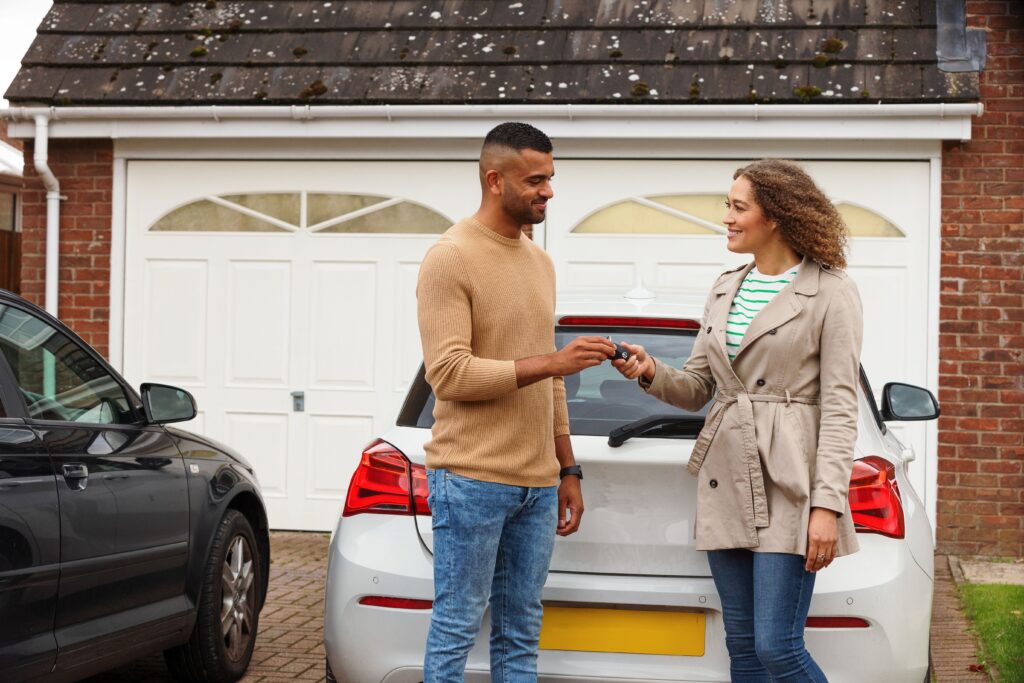
Testing a Car Belonging to a Friend, Neighbour, or Family Member
If you’re buying a second-hand motor from someone you know, you still need dedicated cover. Asking them to add you as a named driver to their annual policy can involve administrative fees, take time to update, and doesn’t make sense for a short test drive.
More importantly, if anything goes wrong during your drive, their annual policy is the one claimed against, putting their hard-earned No Claims Discount (NCD) at risk. Choosing standalone hourly car insurance keeps their annual cover completely protected. Even if they’re letting you test drive the vehicle for a full weekend, a few days of temporary cover makes more sense than being added as a named driver.
Can a Learner Test-Drive a Car?
Yes, learner drivers can test drive a car, but clear legal rules apply:
- You must hold a valid UK provisional driving licence.
- You must display L-plates (or D-plates in Wales) clearly on both the front and rear of the vehicle.
- You must be accompanied at all times by a supervising driver who is at least 21 years old (insurance policies may require them to be 25+), and has held a full UK licence for at least three continuous years.
- Must have appropriate insurance in place.
Most dealership trade policies don’t cover provisional licence holders. Some sellers may also be reluctant to let a learner test drive their car. If you want to try out a car before your practical test, setting up dedicated learner driver cover is the most straightforward route. Just make sure your policy doesn’t restrict test drives and that the vehicle has another underlying policy active alongside your temporary cover.
Test Driving an Electric Vehicle (EV)
Temporary insurance for EVs can help you get a feel for your potential new electric car. Electric vehicles deliver instant torque and regenerative braking, which can feel noticeably different if you’re used to a conventional petrol or diesel engine. That makes a test drive even more important.
Test Driving a Van or Commercial Vehicle
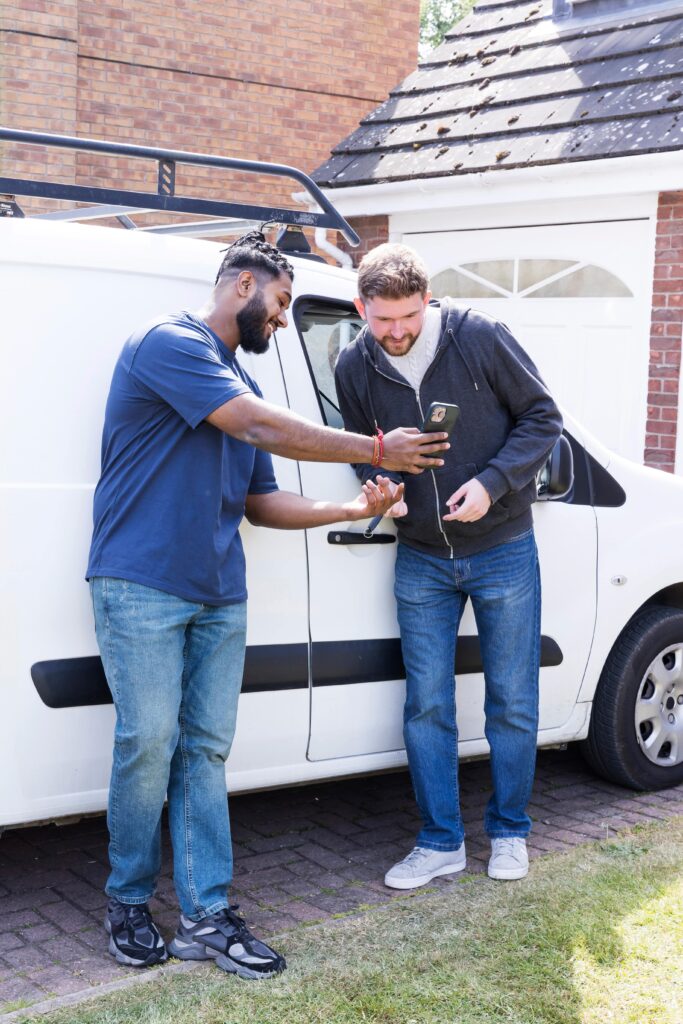
It isn’t just cars that drivers are testing before buying. Vans represent a huge and growing portion of the used market. Whether you’re a tradesperson expanding your business, a courier needing your own wheels, or someone planning a camper conversion, grabbing temporary van insurance to test drive your potential new wheels is easy.
According to our data5, almost one in five (18.3%) test drive policies are taken out for a van, and that share has been steadily rising:
- 2024 (Jan to Oct): 15.5% of test drive policies
- 2025 (Jan to Oct): 17.8% of test drive policies
- 2026 (Jan to Oct): 20.0% of test drive policies
Test Drive Checklist: What Buyers and Sellers Need to Do
A successful test drive requires checking the legal paperwork, the car’s mechanical health, and how it performs on different road types. Follow this structured checklist before, during, and after your drive.
Pre-Drive Checks for Buyers (Before You Turn the Key)
Take your time inspecting the car on the driveway before starting the engine:
- Check the paperwork: Confirm the seller has the original V5C logbook in their name and that the address matches where you’re viewing the vehicle. Check the MOT history online via GOV.UK for past issues.
- Feel the bonnet (cold start check): Place your hand flat on the bonnet. If it’s warm, the seller may have warmed the engine up to mask rough idling, battery issues, or cold-start smoke.
- Inspect tyres and bodywork: Check that tyre treads exceed the legal 1.6 mm limit and look for uneven wear, which indicates alignment issues. Look down the flanks for rust, panel gaps, or mismatched paint that could suggest prior accident damage.
- Look under the bonnet: Check fluid levels. The oil should be amber or dark brown, not milky (a sign of head gasket trouble). Coolant should be clean, with no signs of leaks around hoses.
- Test cabin electronics: Turn the ignition on. All dashboard warning lights should illuminate and extinguish after a few seconds. Test the air con, electric windows, wipers, and infotainment system.
Key Questions to Ask the Private Seller
Before you pull away, ask the owner a few practical questions:
- How long have you owned the car, and why are you selling it?
- Do you have service records, receipts, and old MOT certificates?
- Are there any known faults, quirks, or upcoming maintenance items?
- Has the car ever been involved in an accident or written off (Cat S or Cat N)?
During-the-Drive Checks (What to Test on the Road)
Plan a route that covers 30 mph town streets, open 60 mph national speed limit roads, and a dual carriageway. Turn off the radio so you can listen to the car:
- Clutch and gearbox: The clutch should bite smoothly without slipping or shuddering. Manual gears should slot in cleanly without crunching; automatics should change gear seamlessly without hesitation.
- Engine performance: Accelerate firmly through the gears on an open stretch of road. The power delivery should feel smooth and responsive, without stuttering, flat spots, or excessive exhaust smoke.
- Braking and steering: On a flat, quiet stretch of road, ensure the car tracks straight. Apply the brakes firmly: the car should stop in a straight line without pulling to one side or causing steering wheel judder.
- Suspension and cabin noise: Drive over speed bumps or rough surfaces at reasonable speeds. Listen for clunks, squeaks, or knocks that might point to worn shock absorbers or suspension bushes.
- Handbrake and hill start: Stop on an incline to check that the handbrake holds the car firmly and test how easily you can pull away.
Post-Drive Checks (After You Switch the Engine Off)
Don’t rush to hand over cash the second you park up:
- Hot restart: Turn the engine off, wait two minutes, and restart it. A healthy engine should fire up immediately without hesitation.
- Check for fresh leaks: Look under the car and under the bonnet for fresh oil drips, coolant leaks, or steam.
- Compare the odometer: Check that the mileage displayed on the dashboard matches the figures listed in the service book and MOT history.
What the Private Seller Should Check
If you’re selling your car privately, protecting your vehicle and licence is just as important as showing it off:
- Inspect proof of cover: Never hand over the keys without seeing clear proof of insurance. A buyer can easily show their digital certificate on their smartphone.
- Check their photocard driving licence: Ask to see their physical photocard licence to verify their identity and check that it’s in date.
- Log their contact details: Note the buyer’s full name, address, phone number, and licence number. If a speeding ticket or bus lane charge arrives in the post later, you’ll need this information.
- Always accompany the buyer: Never let a buyer take your car out alone. Keep the keys in your pocket until you’re both safely inside the vehicle.
How to Generate a DVLA Check Code
Whether you’re visiting a dealer forecourt or a private driveway, showing your photocard licence is standard practice. Dealerships and cautious private sellers will also want to check for active penalty points and endorsements.
You can create a free check code in under two minutes via the GOV.UK view driving licence service. The code remains valid for 21 days and allows the seller to verify your driving record online without seeing sensitive personal information. Having this ready on your phone alongside your insurance certificate shows you’re a serious, prepared buyer.
The Do’s and Don’ts of a Test Drive
Keeping these practical rules in mind ensures your test drive stays legal, safe, and focused:
Do:
- Do arrange standalone comprehensive cover in advance for private sales: Dealerships will usually cover you on their trade policy, but private sales require you to sort your own insurance. Getting covered for an hour or two online takes less than two minutes.
- Do bring your driving licence and DVLA check code: Having both ready proves your identity and shows the seller you’re genuine.
- Do test varied road conditions: Drive through 30 mph town streets, 60 or 70 mph dual carriageways, and hill starts to see how the car handles different loads.
- Do test all the cabin electronics: Check that the heating and air con blow correctly, windows operate smoothly, and all controls work.
Don’t:
- Don’t rely on verbal assurances: Never assume you’re covered just because the seller says “it’ll be fine” or assumes their policy covers any driver.
- Don’t rush the drive: Drive for at least 20 to 30 minutes so the engine reaches its normal operating temperature.
- Don’t test drive an untaxed or SORN vehicle: Even with temporary insurance, driving an untaxed or SORN car on public roads is unlawful.
- Don’t let unaccompanied buyers drive away: If you’re the seller, always accompany the driver and keep keys securely in hand until you’re both inside.
Test Drive Insurance FAQs
What if the Seller Says “You’re Covered”?
Be cautious. Private sellers might believe, in good faith, that their comprehensive insurance covers anyone who drives their car, or that your own policy covers you automatically.
Unless the seller holds a specialist “any driver” policy (which is almost exclusively held by businesses), their policy won’t cover you. If police stop you or you’re involved in an accident, a verbal agreement won’t protect you from uninsured-driver penalties. Sorting your own temporary policy ensures you’re legally protected.
What Happens if You Get a Speeding Ticket or Fine on a Test Drive?
The driver behind the wheel is legally responsible for any motoring offences committed during the drive.
- Speed cameras and bus lanes: When a Notice of Intended Prosecution (NIP) arrives in the post, the registered keeper fills in Section 172 to name the driver at that specific time and date.
- Seller protection: This is why private sellers must always record the buyer’s full name, address, and driving licence number before starting the test drive.
- Buyer tip: Stay alert to changing speed limits on unfamiliar roads to keep your drive penalty-free.
What Happens if You Have an Accident During a Test Drive?
If you have an accident while driving under a standalone temporary policy, you handle the claim directly through that short-term policy.
Because our temporary cover operates independently:
- The seller’s annual policy and their No Claims Discount remain completely untouched.
- You’re only responsible for the policy excess agreed in your temporary schedule.
- Both parties avoid messy insurance disputes.
What if the Car Is Uninsured or SORN?
Under Continuous Insurance Enforcement (CIE) laws, vehicles in the UK must be insured at all times unless registered off the road with a Statutory Off Road Notification (SORN).
A car declared SORN cannot be driven on public roads for a test drive, even if you buy temporary insurance for yourself. To insure a SORN car, you must be driving it to a pre-booked MOT. To test-drive a SORN vehicle, the owner must tax it and ensure it has an active MOT before it touches a public highway.
Can You Test-Drive a Car Without Tax?
No. All cars driven on UK public roads must have valid vehicle tax.
While registered motor dealers can use red trade plates to legally test-drive untaxed forecourt stock, private vehicles must be taxed before hitting the road. If you decide to buy the car, you can tax a car with temporary insurance as soon as ownership transfers to you.
How Much Does Insurance Cost for a Test Drive?
Arranging test drive car insurance is far more affordable than amending an annual policy. Instead of paying expensive admin fees, you pay only for the exact time you need behind the wheel.
- 1 Hour (from £11.72): Ideal for a quick local test drive of a private vehicle to run through the mechanical essentials.
- 2 Hours (from £11.72): Perfect for an extended test drive, letting you try dual carriageways, rural roads, and hill starts without feeling rushed.
- 1 Day (from £21.97): Best if you want ample time to carry out a comprehensive inspection, take the car for an independent mechanical check, or give yourself breathing room to complete the sale and drive it home later that day.
Prices shown are based on the lowest sold prices over the period 12/25 to 05/26. Your actual price will depend on factors like your age, driving history, location, and the vehicle’s insurance group.
Remember that temporary insurance is tied to a specific vehicle registration. Whether you just need an hour to spin around the block or a full day to inspect the car thoroughly and take your time, short-term car insurance gives you total flexibility without paying expensive annual policy fees.
Can You Drive a Car Home After the Test Drive?
If the test drive goes well and you agree on a sale, you’ll need a legal way to get your new wheels home.
You cannot drive the car home under the seller’s insurance, and you cannot rely on a one-hour test drive policy once its time window expires. To drive a new car home, you need insurance and tax in place.
Many motorists use drive-away car insurance for this exact transition. A short-term policy that lets you drive your new car home immediately, giving you plenty of time to compare annual insurance deals from the comfort of your sofa.
You don’t need to worry about overlapping cover either; two people can insure the same car at the same time on separate policies without invalidating each other’s cover.
Test Drive Your New Car With Complete Peace of Mind
Testing a prospective car should be exciting, not stressful. Taking out the right cover before you turn the key lets you focus on how the car handles, sounds, and feels on the road.
Ready to test drive your next car? Get a temporary car insurance quote in under two minutes and enjoy your test drive with complete confidence.
- Prices shown are based on the lowest sold prices over the period 12/25 to 05/26 ↩︎
- VEH9902a Data Set from Department for Transport ↩︎
- Used Car Transactions for United Kingdom Table from SMMT ↩︎
- GoShorty customer data, January 2024 to October 2026 ↩︎
- GoShorty customer data, January 2024 to October 2026 ↩︎
Similar articles you might like
-
Can Someone Else Drive My Car?
Handing your car keys to a friend, family member, or partner is everyday practice. You might want to…
-
Is Van Insurance Cheaper Than Car Insurance?
Van insurance is often more expensive than car insurance because vans are more likely to be used for…
-
How To Get Insured On Your Parents’ Car
Here’s what you need to know about getting insured on your parents’ car: If you’re wondering how to…