
Impound Causes: Why Would a Car Be Impounded?
11 December 2025 | 
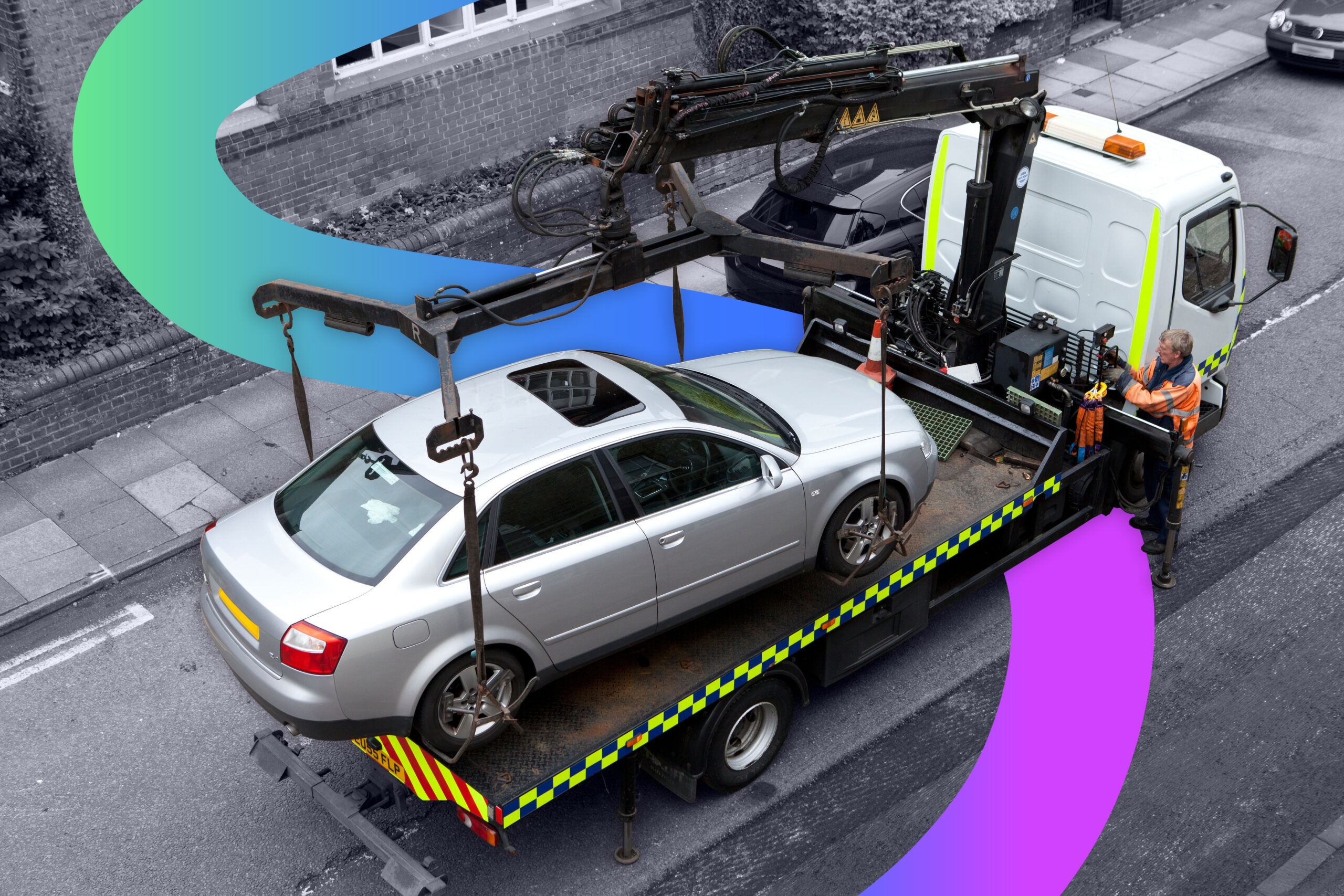
Seeing your parking spot empty where you left your car is a stomach-dropping moment. Has it been stolen? Or has it been towed away by the authorities? Vehicle impoundment is more common than you might think, and it doesn’t just happen to criminals. Regular drivers can get caught out by administrative errors or simple lapses in memory.
If you’re wondering, why would a car be impounded? You’re in the right place. Understanding the reasons for impounding a vehicle is the first step to ensuring it never happens to you. From insurance mix-ups to parking violations, we’re going to break down exactly why cars get impounded and how impound insurance can be integral to getting your car back.
Who Has the Power to Impound Your Car?
Before we dive into the specific reasons, it’s worth knowing who actually has the authority to take your vehicle. In the UK, it’s not just the police who can call for a tow truck.
The main bodies with the power to seize vehicles include:
- The Police: They have broad powers to stop and seize vehicles for a variety of driving offences.
- The DVLA: Primarily focused on vehicle tax evasion.
- Local Councils: Usually involved in cases of abandoned vehicles or persistent parking fines.
- Bailiffs: Can seize assets, including cars, to recover unpaid debts.
Common Reasons for Impounding a Car
So, why would the police impound a car? The police have statutory powers under the Road Traffic Act to seize vehicles that are being driven illegally. Let’s look at the most frequent causes for cars being seized:
1. Driving Without Insurance
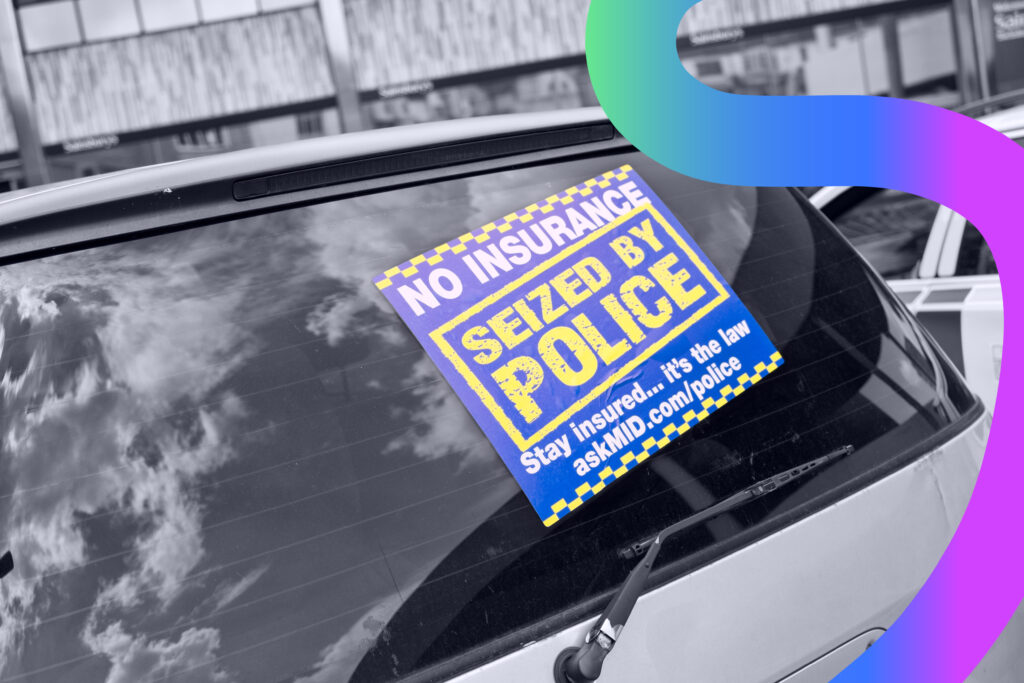
This is one of the most common reasons for vehicle impoundment in the UK. Under Section 165A of the Road Traffic Act 1988, the police have the power to seize any vehicle if they have reasonable grounds to believe it’s being driven without insurance.
It’s easy to think you’d never drive uninsured, but mistakes happen. Maybe a direct debit failed, or you thought your policy auto-renewed when it didn’t. Perhaps you were driving someone else’s car, assuming your comprehensive policy covered you (it often doesn’t).
If you’re caught driving without insurance – whether unintentionally or not – not only will your car be towed, but you’ll likely face a fine and points on your licence.
2. Driving Without a Valid Licence
Just like insurance, you need a valid driving licence to be on the road. If you’re stopped and can’t prove you have a licence, or if you’re driving in breach of your licence conditions (like a learner driving alone), the police can seize the car.
This often catches out learner drivers. If you’re a learner, you must have learner insurance, be supervised and follow other learner licence rules.
It’s also vital to update your driving licence if your details change to avoid administrative issues.
3. Careless or Anti-Social Driving
Under Section 59 of the Police Reform Act, the police can seize a vehicle if it’s being used in a manner that causes alarm, distress, or annoyance to members of the public. This includes:
- Driving carelessly or inconsiderately.
- Driving off-road without permission.
- Racing or performing stunts on public roads.
Usually, you will receive a warning first, but if you (or the car) are caught doing it again within 12 months, the car can be seized on the spot.
4. Untaxed Vehicles
The DVLA has the power to clamp and tow vehicles without valid road tax. While they often clamp first, they can impound the vehicle immediately in certain circumstances.
Since tax discs were abolished, it’s harder to spot if your tax has expired just by looking at the windscreen. It’s essential to check your car tax status regularly and set reminders for renewal. Unless your car is SORN, your car must always be taxed and insured. Remember, you can’t just park on the street if you aren’t insured or taxed; your car will be seized.
5. Abandoned Vehicles
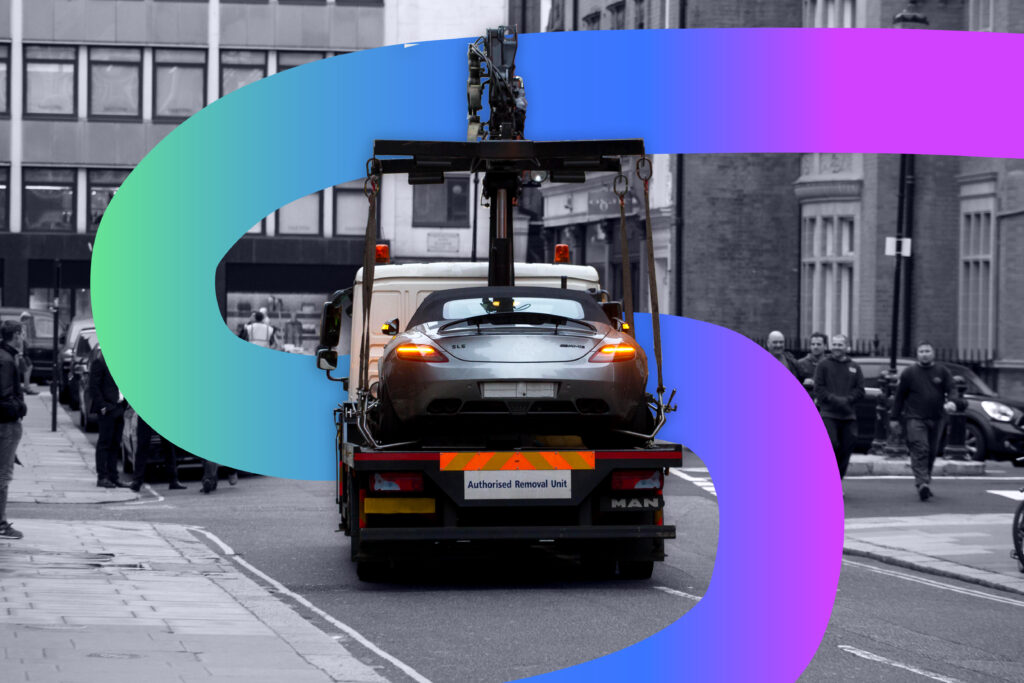
If a car is left in the same spot for a long period, is in a state of disrepair, or appears unroadworthy, the local council may classify it as abandoned. They have a duty to remove these vehicles. If you’re planning to leave your car for a while, make sure it’s parked legally and doesn’t look neglected.
6. Unpaid Parking Fines
While a single parking ticket won’t usually result in your car being towed, persistent evasion of fines can. If you have multiple unpaid Penalty Charge Notices (PCNs), bailiffs may be instructed to seize assets to cover the debt, and your car is an obvious target.
7. Accidents and Collisions
You might assume that if you have an accident, your insurance company handles the recovery. However, the police will often seize or recover a vehicle from a crash scene for three main reasons:
- Obstruction or Danger: If your car is blocking a road, is in a dangerous position (like on a blind bend), and you’re unable to move it or arrange your own recovery immediately, the police will remove it to ensure public safety.
- Safekeeping: If you’re taken to hospital or otherwise incapacitated, the police have a duty of care to remove the vehicle to a secure compound to prevent theft or further damage.
- Forensic Examination: If the accident involved a serious injury, fatality, or a crime (such as a hit-and-run), the police will impound the vehicle to gather evidence.
Even if the accident wasn’t your fault, if the police arrange recovery, you will usually have to pay the statutory removal and storage fees to get it back.
8. Stolen Vehicles
It feels incredibly unfair, but if your car is stolen and then found by the police, they won’t just return it to your driveway. Instead, they’ll usually recover it to a police pound. They do this for two main reasons:
- Forensics: To examine the car for fingerprints, DNA, or other evidence that could help catch the thieves.
- Safekeeping: To ensure the car is secure and not at risk of being stolen again or vandalised where it was abandoned.
Once the police have finished their checks, they will authorise the release of the vehicle. Crucially, you are often still liable for the statutory removal fees, though many comprehensive insurance policies will cover this cost. If you need more help, check our guide on what to do if your car has been stolen.
9. Evidence in a Crime
If a vehicle has been used in connection with a crime – such as a robbery, drug offence, or a hit-and-run – the police have the power to seize it as evidence under the Police and Criminal Evidence Act (PACE).
Unlike other forms of impoundment, you cannot simply turn up with your documents and pay to release the car. The police will hold the vehicle until their investigation or forensic examination is complete. This can sometimes take weeks or even months. You will be notified by the officer in charge of the case when the vehicle is ready for collection.
How to Avoid Vehicle Impoundment
Now we know what causes a car to be impounded, how do you stop it from happening? The good news is that most impound scenarios are completely avoidable with a bit of life admin.
- Check your insurance regularly: Don’t assume auto-renewal has worked. Check your documents or use the Motor Insurance Database (MID). Be aware of how long it takes for insurance to show on the MID to avoid confusion if stopped. If you’re between policies or driving someone else’s car, use temporary insurance to stay consistently protected.
- Understand your policy: Know what can invalidate your car insurance. Modifications, job changes, or moves without notifying your insurer can leave you technically uninsured.
- Tax and MOT: Set reminders for these. You can’t drive a car without them (unless driving to a pre-booked MOT). If you’ve just bought a vehicle, ensure you know how to take your new car home legally.
- Drive safely: Avoid speeding fines and aggressive driving that could be flagged as anti-social.
How to Get Your Car Back
If you find yourself in the unfortunate position of having an impounded car, don’t panic. You can get it back, but you need to act fast. Storage fees are charged daily, so the longer it sits there, the more it costs. In most cases, you’ll need specialist impound release insurance to retrieve your car or van. Find out more about how to get your car out of an impound in our guide.
Your car being impounded simply means it’s been legally seized and is being held by authorities. While it sounds scary, understanding the reasons for impounding a vehicle – from missing insurance to untaxed vehicles – can help you to avoid it.
Stay on top of your admin, drive responsibly, and ensure you always have the right cover for the vehicle you’re driving. If you’re borrowing a van or car, don’t risk it – grab a temporary car or temporary van insurance policy to be safe. It takes minutes and could save you a massive headache later.
If you ever do find yourself with an impounded vehicle, don’t let daily storage fees pile up. Get the specialist cover you need to release your vehicle today with an impound insurance quote.
Similar articles you might like
-
How to Get Your Vehicle Out of an Impound
Finding out your car has been seized is a nightmare. Whatever the reason for impoundment, whether it was down to
-
Impound Causes: Why Would a Car Be Impounded?
Seeing your parking spot empty where you left your car is a stomach-dropping moment. Has it been stolen? Or has
-

Can I Drive a New Car Home Without Insurance?
The short answer? No, you cannot drive a car home without insurance or tax, even if you’ve just bought it.